

The recent leadership transition in the Edo State House of Assembly has sparked intense public debate, particularly regarding the purported move to convert a former Speaker’s resignation into a full-fledged impeachment. As a former Speaker of this hallowed chamber, I feel compelled to offer an objective, constitutional perspective on this development.
Section 92(2) of the 1999 Constitution of the Federal Republic of Nigeria (as amended) is completely unambiguous regarding how a Speaker vacates office. It outlines clear pathways: a Speaker leaves either through voluntary resignation or by removal via a resolution supported by not less than a two-thirds majority of the House members.
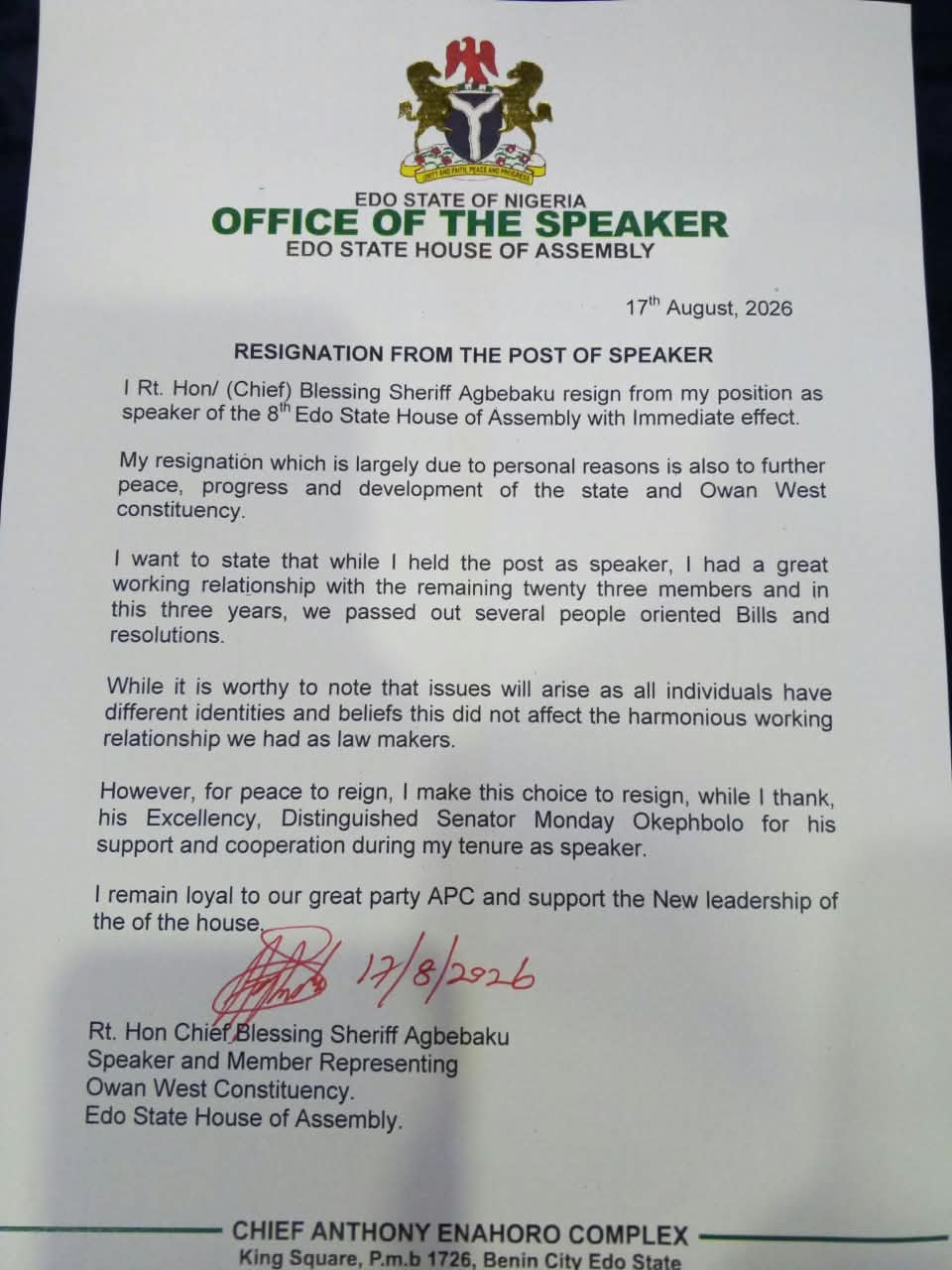
In the eyes of the law, a resignation is an absolute act. Once a Speaker formally tenders a resignation, the office is instantly vacated. Attempting to retroactively “convert” a valid resignation into an impeachment is constitutionally superfluous and legally unrecognized. It is an exercise in legislative futility, simply put, you cannot remove a person from an office they no longer occupy.
While the House absolutely retains its statutory right to investigate any allegations of administrative or financial misconduct by any of its members through properly constituted ad-hoc committees, such probes are entirely distinct from the constitutional mechanics of leadership removal. Conflating a criminal or ethical investigation with an impeachment after the fact only risks plunging the institution into an unnecessary constitutional crisis.
The legislature is the bedrock of our democracy, and its procedures must remain sacrosanct. I urge the Assembly to uphold the dignity of the institution, adhere strictly to the rule of law over political grandstanding, and ultimately focus on delivering the dividends of democracy to the good people of Edo State.
Rt. Hon. Marcus I. Onobun, KSC
Former Speaker, Edo State House of Assembly
Member, Representing Esan Central, Esan West, and Igueben Federal Constituency, Edo State.